
Boulder council gets first look at Frontier Avenue redevelopment proposal
A no-action concept review put a major East Boulder redevelopment concept on council’s agenda, but rezoning, height changes and future public hearings would still be required before anything could move forward.
Published at
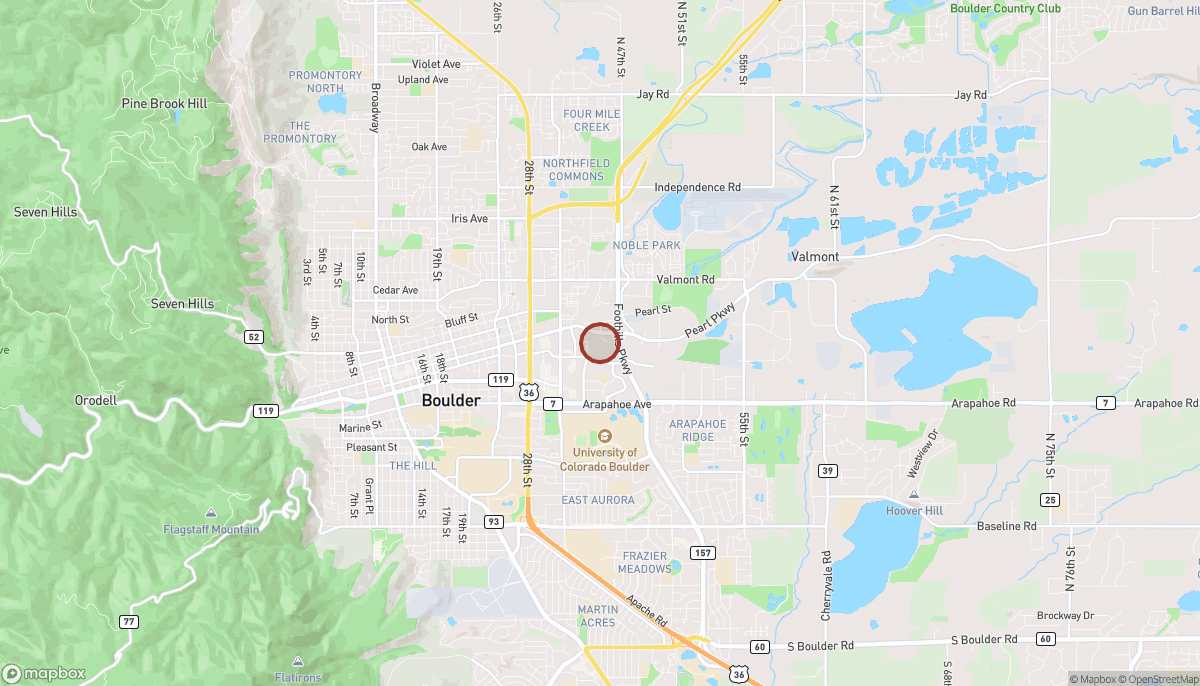
Boulder City Council got its first formal look June 4 at a proposal to remake 3550 and 3850 Frontier Ave. into a mixed-use district with about 500 apartments, a hotel, a 2,500-person events venue and rehearsal space, 30,000 square feet of commercial space, and structured parking. Council minutes included in the June 4 packet show the council received the concept-plan check-in on March 5 and took no action.
The project is being advanced by Boulder-based Conscience Bay Company, which lists 3550-3850 Frontier Ave. among its properties. On the company's team page, Daniel Aizenman is identified as director of development and design. In earlier Boulder Reporting Lab coverage, Aizenman said the four-block project was among the first likely to explore the city's new commercial-only metro district financing tool.
Even at the nonbinding concept stage, the proposal is large by Boulder standards and could become an early test of how much housing and entertainment use the city will allow on an industrial site east of the railroad tracks. It also comes as Boulder prepares for the Sundance Film Festival's move beginning in 2027, a connection the developer has tied to the venue component, according to Boulder Reporting Lab.
The broader planning context appears favorable. The city says Boulder Junction Phase 2 is intended to implement the Transit Village Area Plan on the east side of the tracks as a denser, mixed-use, pedestrian-oriented district tied to regional transit. The Boulder Valley Comprehensive Plan also calls for improving the jobs-housing balance by encouraging new housing and mixed-use neighborhoods near jobs and transit, while improving mobility connections in East Boulder.
But the concept would need major approvals before anything could be built. Council agenda materials say it would require rezoning and a height modification. A Citizen Portal summary of the Feb. 3 Planning Board concept review said staff had identified multiple rezoning paths still under consideration, including MU-4 with adjustments, a flex district or a new zone, and had flagged transportation, open-space design and a requested 20-year vesting period as major issues.
That lines up with the city's own Phase 2 implementation framework. A city implementation document for the Transit Village Area Plan says land-use map changes and rezoning in Phase 2 are supposed to follow plans for funding and delivering public improvements, with adequate transportation and other facilities in place as redevelopment occurs.
The site's current condition helps explain both the opportunity and the likely friction. Conscience Bay describes the property as a 188,000-square-foot industrial warehouse complex occupied by manufacturing, warehouse, office and brewery tenants. The comprehensive plan says many service-commercial and industrial uses in Boulder Junction's north and east areas are expected to continue even as the district urbanizes, creating tension between redevelopment pressure and preserving business-serving industrial space.
The public record available for this assignment does not show organized neighborhood opposition in council materials or other city documents that could be verified. But commenters on later Boulder Reporting Lab coverage raised concerns about displacement of existing businesses, building scale and the project's fit with Boulder. Those comments are not part of the formal city record, but they point to issues likely to draw scrutiny if a full application is filed.
Several basic questions remain unresolved in the public materials reviewed for this story: what zoning change the developer will seek, how tall the buildings would be, how much housing would be market-rate versus below-market, how traffic and parking impacts would be handled around an events venue, and whether financing would depend on a metro district or other public-private tools.
For now, the clearest takeaway is that the council's June 4 review did not approve anything. It put a potentially consequential East Boulder redevelopment concept on the public agenda early, while leaving the hardest land-use, height, transportation and compatibility decisions for later rounds.