
Longmont council approves ban on new hyperscale data centers
The city approved an ordinance barring new data centers at roughly 70 megawatts or more of projected peak demand, though the final vote tally and exact adopted amendment language were not yet available in the public record reviewed by Badger.
Published at
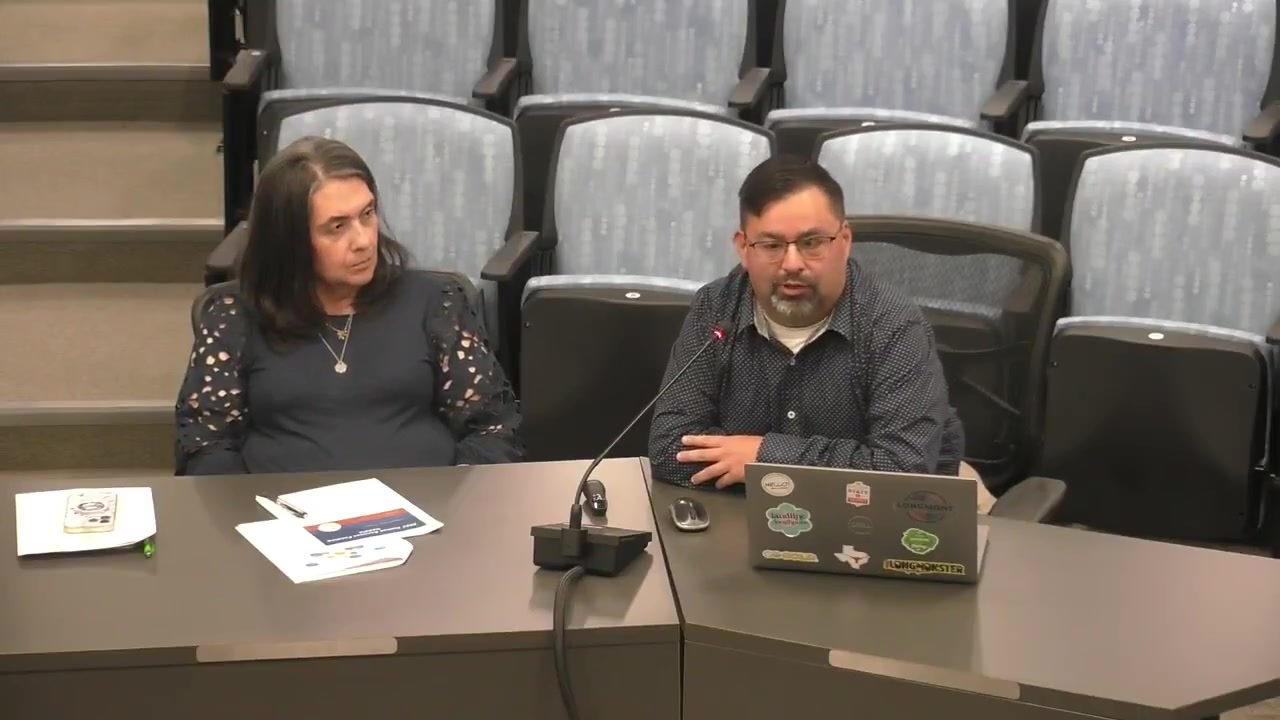
Longmont City Council approved Ordinance 2026-34 on June 9 after a public hearing and second reading, adopting a citywide ban on new hyperscale data centers after weeks of debate over power demand, water use and economic development.
The ordinance prohibits data centers that meet Longmont’s definition of “hyperscale” in any zoning district. On first reading in May, the ordinance defined that threshold as a facility with projected or contracted peak electrical demand equal to 5% of Platte River Power Authority’s nameplate capacity, or 100 megawatts, whichever is lower, according to Times-Call’s coverage of the earlier version. Based on current PRPA capacity, that would put the trigger at about 70 megawatts.
At the June 9 meeting, council members adopted amendments previewed during council discussion, including one clarifying that the threshold applies when demand is “equal to or greater than” that PRPA-based limit and another adding guidance for staff when deciding whether multiple facilities amount to an aggregated or coordinated operation.
The public meeting record available to Badger indicates council also aligned the ordinance’s internal cross-references to that threshold and adopted all three amendments. But because the transcript available to Badger cuts off before the final roll-call vote, the story relies on Denver7’s report that council passed the ban for the final outcome.
Based on the council record and prior reporting on the first-reading version, the ordinance appears intended to block not only a single very large facility but also phased expansions and related projects that together would cross the hyperscale threshold. Times-Call reported that an earlier amendment directed the city to assess projected peak electrical demand using materials including utility service requests, load letters, interconnection requests, phased expansion plans and equipment specifications, as verified by Longmont Power and Communications or its designee. The same report said the city could not approve an expansion, modification or additional phase if that action would cause a data center, campus or coordinated operation to meet or exceed the threshold.
Supporters argued the city should act before a proposal arrives. In comments previously reported by Denver7, Councilmember Matthew Popkin said hyperscale facilities raise concerns about electricity demand, fire risk, drought and water consumption. Times-Call previously reported that Popkin said 100 megawatts is roughly equivalent to the average power use of about 50,000 Colorado homes, while 70 megawatts is about 35,000 homes.
Skeptics argued the city may already have sufficient protections for large users. Denver7 reported that Longmont Electric Utilities Director Darrell Hahn said before the final vote that the city already has safeguards in place even if the ordinance does not pass. On first reading, Councilmember Diane Crist said she did not see hyperscale data centers as a problem requiring a ban because the city already had “bumpers and guardrails,” according to Times-Call’s earlier report.
The June 9 hearing showed that divide remained. According to the meeting record, public commenters split between residents urging quick action to protect water and energy resources and others warning the ordinance could discourage future technology jobs and economic development. In the same discussion, Councilmember Diane Crist called the proposal “half baked,” while Councilmember Crystal Prieto said she would have preferred tabling the item or holding a study session because the late amendments made the final language harder to evaluate.
The decision suggests Longmont is willing to forgo one category of potentially lucrative industrial growth in favor of preserving utility capacity and limiting resource-intensive land uses. On the same June 9 agenda, the city also took up downtown redevelopment, housing finance and urban campus items, underscoring that broader growth planning remains active even as council closes off this use.
What remains unclear from the public record reviewed by Badger is the official final vote tally and the exact adopted wording of the June 9 amendments, especially the standards staff will use to decide when separate facilities count as an aggregated or coordinated operation. Those details should become clearer once the city posts the final adopted ordinance or approved meeting minutes.