
Longmont council finalizes ban on new hyperscale data centers
A 6-1 vote on June 9 gave final approval to Ordinance 2026-34, barring new hyperscale data centers citywide after council adopted technical amendments to the size threshold and enforcement language.
Published at
Longmont City Council gave final approval June 9 to Ordinance 2026-34, finalizing a citywide ban on new hyperscale data centers after weeks of debate over power demand, water use, economic development and surveillance concerns.
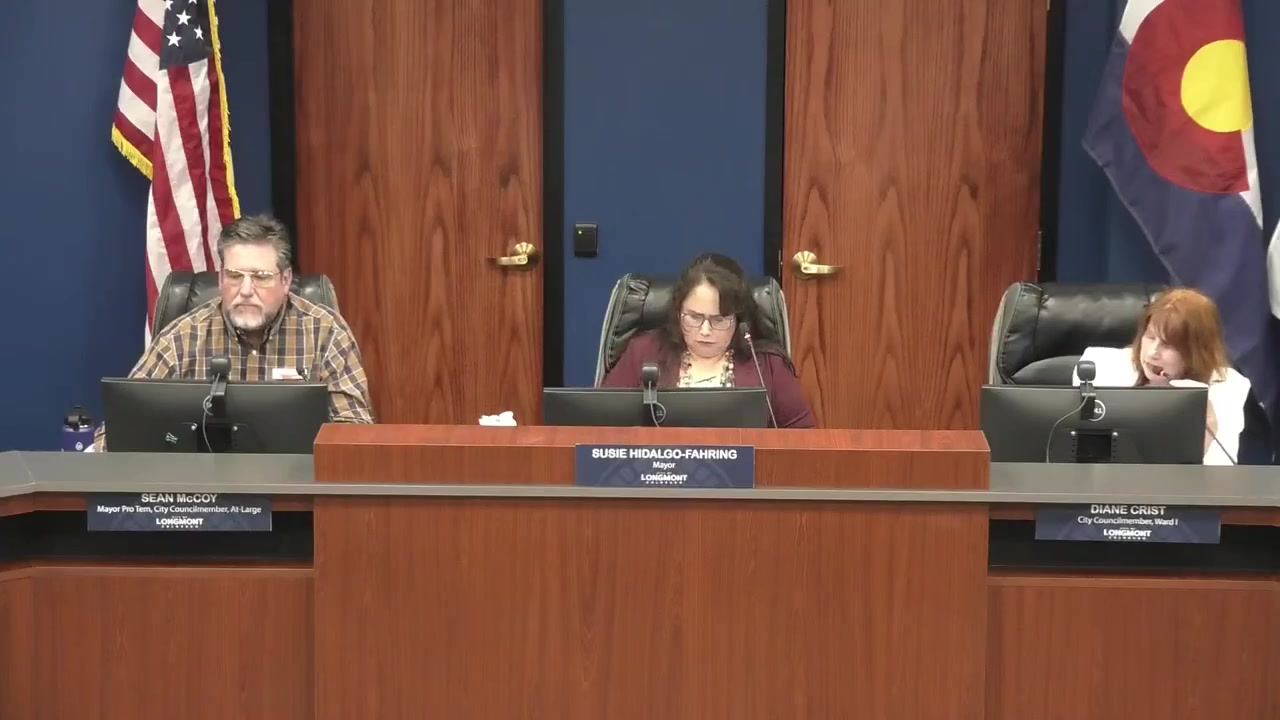
A recording of the June 9 council meeting indicates the ordinance passed 6-1 after a public hearing and three technical amendments. The same meeting record shows Councilmember Diane Christ arguing for more time and a study-session-style review instead of a same-night final vote.
Because the final enrolled ordinance text was not available in the materials reviewed by Badger, some details about the adopted amendments rely on post-vote reporting. The Daily Camera and Denver Post reported that the adopted ordinance defines a hyperscale data center as a facility with projected or contracted peak electrical demand equal to or greater than 5% of Platte River Power Authority's nameplate generating capacity, or 100 megawatts, whichever is lower. Those outlets reported that, based on current capacity, the threshold is about 70 megawatts.
The June 9 meeting recording also indicates council approved amendments to align internal cross-references with that threshold and to give staff more direction on when multiple facilities should be treated as one coordinated operation for enforcement. The Daily Camera's post-vote report said the changes also clarified that the threshold applies to facilities meeting or exceeding the limit and updated language to prevent expansions that would push a facility over the cap.
The ordinance is aimed at future industrial recruitment rather than Longmont's existing smaller data-center uses. During the June 9 discussion, officials and council members said in the meeting the measure was intended to set guardrails before very large facilities seek to locate in the city. The Daily Camera reported that City Manager Harold Dominguez said Longmont has received inquiries from large data center operators in the past and that the ordinance will provide clearer direction going forward.
Speakers for and against the measure offered sharply different views. The June 9 meeting record shows public commenters raising concerns about water use, energy use, surveillance and environmental impacts, while others warned the ordinance could discourage future economic development and technology jobs. Denver7 reported that residents supporting the ordinance argued hyperscale facilities can place heavy demands on power and water systems, and the station cited national research saying some large data centers can use millions of gallons of water a day.
Opponents inside and outside council focused less on whether Longmont should regulate large utility users than on whether this ordinance singled out one industry too broadly. The Denver Post reported that Christ cast the lone dissenting vote and argued the city already had safeguards for large utility users. The June 9 meeting record shows Councilmember Yarbrough Prieto saying she would have preferred tabling the measure or holding a study session because late amendments made the final language harder to evaluate.
For developers, the vote means projects at that scale are now barred in every zoning district rather than reviewed case by case. For residents who pushed for quicker action, it moves Longmont from considering the policy to adopting a citywide prohibition.
What remains unclear from the records available to Badger is whether council will revisit related issues discussed during the debate, including water consumption, noise and other impacts from smaller facilities that do not meet the hyperscale threshold. The Daily Camera reported that Mayor Susie Hidalgo-Fahring described the ordinance as a starting point rather than the end of the conversation.