
Louisville weighs $144.5 million capital plan as $291.8 million in projects remain unfunded
A proposed six-year capital plan and projected operating gaps could force choices about Louisville services, fees and infrastructure. No budget or capital plan has been adopted.
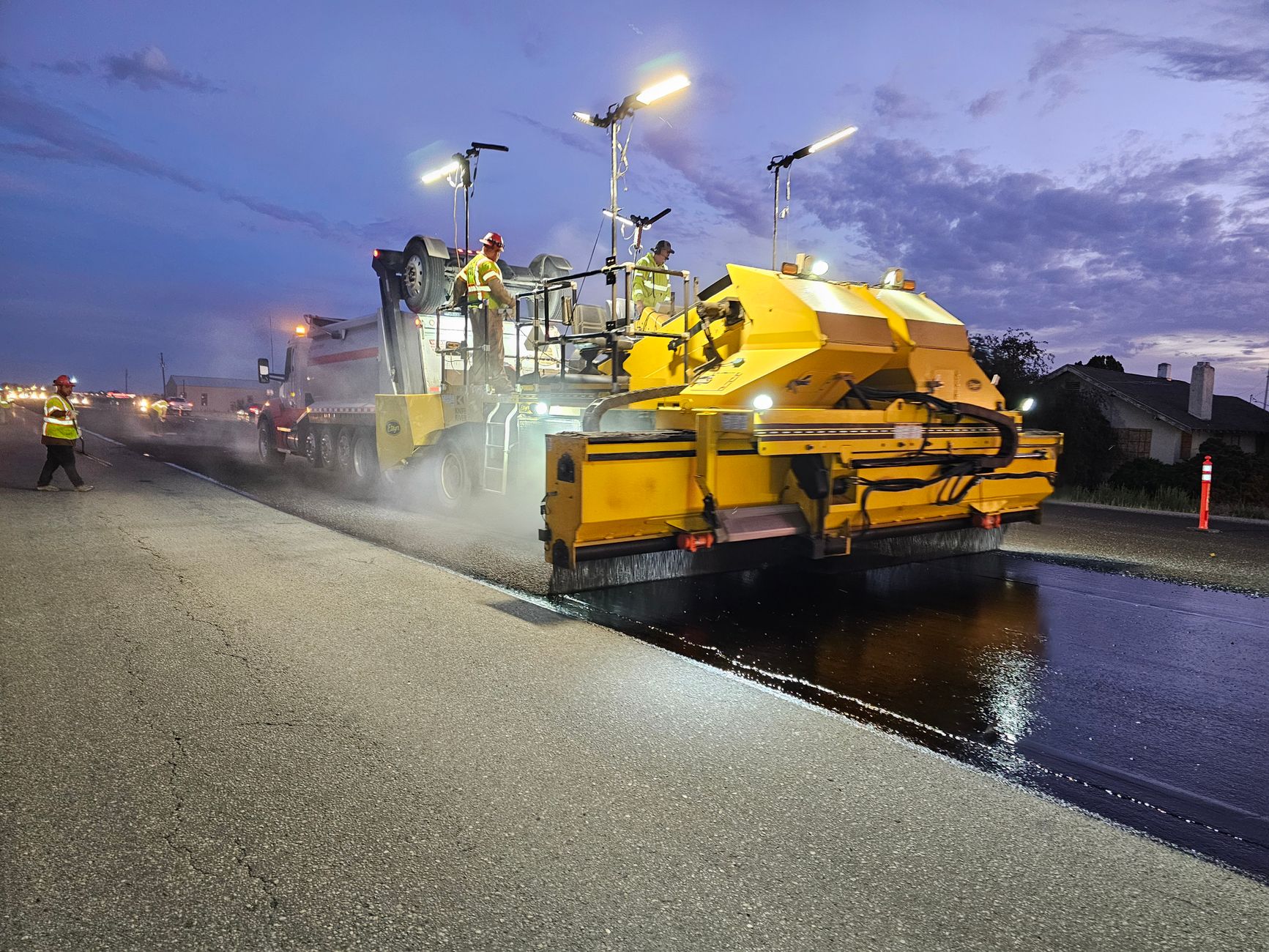
Louisville is considering a proposed six-year capital plan totaling $144.5 million while maintaining a separate list of nearly $291.8 million in unfunded projects. Preliminary 2027-28 forecasts also show operating gaps in the General Fund, Parks Fund and Golf Fund, putting services, fees and capital priorities before the City Council.
The figures were presented at the city’s July 22 budget retreat, which was informational and did not include a vote. The city’s meeting packet lists a Finance Committee budget-retreat recap Aug. 20, a recommended-budget presentation Sept. 1, a final presentation Oct. 20, and budget and capital-improvement-plan adoption Nov. 2. Those are scheduled milestones, not completed decisions.
Operating-budget pressure
The retreat presentation projects General Fund revenue of $28.7 million against $29.2 million in expenses in 2027, and $29.6 million against $30.2 million in 2028. After about $1.5 million in operational turnback, the model shows gaps of roughly $200,000 in 2027 and $600,000 in 2028. It includes $250,000 in one-time expenses in 2027 and $40,000 in 2028.
The Parks Fund’s projected gaps are about $40,000 in 2027 and $85,000 in 2028 after about $190,000 in turnback. Golf’s operating gaps are about $200,000 and $230,000, respectively. Including roughly $400,000 in annual capital expenses, Golf’s total projected expenses exceed revenues by about $600,000 in each year.
Staff outlined options including reviewing vacant positions, fees and cost allocations; reallocating General Fund resources; and reducing programs or service levels. The preliminary City Manager model includes 6.8 full-time-equivalent positions costing about $804,500 in 2027, plus $274,000 in variable personnel costs. Thirteen additional requests totaling about $1.62 million were not recommended.
For Parks, staff modeled a $100,000 annual Conservation Trust Fund transfer through 2032 and asked the council to consider extending or increasing it beyond 2028, increasing General Fund support if feasible, or reducing services. The model projects about $3.1 million in the Open Space acquisition reserve by 2032, below a $5 million target, and calls for revisiting the reserve percentage. The materials do not establish a new percentage, dollar amount or allocation change.
For Golf, staff is modeling fee increases, changes to season passes and residential preferences, and capital-project deferrals. The materials do not establish which fees or projects would change.
Staff also recommended ending the temporary Recreation Center debt mill-levy credit in 2027. That would raise the city levy from 1.375 to 1.70 mills and add an estimated $20 annually for a median home. Staff recommended placing an extension of the city’s 0.125-cent Historic Preservation Fund tax on the November ballot. The tax expires Dec. 31, 2028, and the proposed extension would run through 2038. Neither policy had been adopted in the retreat materials.
Proposed capital plan
The proposed funded CIP totals $144,516,292 over six years, according to the capital-project summary and project forms. Planned annual spending ranges from $15.2 million in 2031 to $37 million in 2028.
The largest fund-level allocations are $66.76 million in the Capital Projects Fund and $52.65 million in the Water Utility Fund. Major proposed work includes:
- $34.67 million for annual roadway resurfacing.
- Water projects including $7.77 million for waterline replacement, $8.64 million for the NCWCD-Windy Gap firming project, $6.05 million for the Raw Water Integration Project and $10 million for South County Water Treatment Plant residual management.
- $8.72 million in wastewater capital and $5.85 million in stormwater work.
- Parks and recreation projects totaling $4.37 million for recreation, $2.04 million for open space and $1.15 million from the Conservation Trust Lottery Fund. A $1.875 million playground and park-improvements program would replace one or two playgrounds annually through 2032.
- Transportation and technology projects including $802,000 for the Dillon Road sidewalk project, $500,000 for community trail connections, $630,000 for middle-mile fiber and $997,660 for citywide electric-vehicle charging.
The documents describe proposed requests and planning figures, not an approved or financed plan. Staff said initial capital requests exceeded $400 million across more than 200 projects and that it would prioritize existing assets, critical infrastructure, core functions and information technology while refining the CIP with council.
Unfunded projects and financing
The separate unfunded-project inventory totals $291,827,816. About $268.1 million, or nearly 92%, is assigned to the Capital Projects Fund. The list includes $20.5 million for the Golf Course Fund, $3.09 million for the Storm Water Utility Fund, $125,000 for the Water Utility Fund and $50,000 for the Recreation Fund.
The largest listed needs are a $140.8 million citywide underpass project, $46.2 million in CO 42 corridor enhancements and $23.25 million for City Services 2. Other entries include $15.52 million for recreation-center decarbonization, $5.83 million for city-services decarbonization and solar, $5.84 million for Downtown Front & Center Phase II, and $3.09 million for stormwater detention-pond maintenance.
The city labels the projects “unfunded,” but the materials do not establish that they have been formally deferred, scheduled or rejected. Some project sheets contain duplicated tables and conflicting figures, including different amounts for golf clubhouse work, so the inventory is a high-level needs list rather than a construction schedule.
Staff said major utility projects may require borrowing, particularly for water, solid residuals and an administrative building. Utility capital investments are preliminarily estimated at about $67.2 million over 2027-32. The materials do not identify a specific utility-rate increase to address the unfunded list.
Council guidance and the fall budget process will determine which projects remain in the funded program, which stay on the unfunded list and whether borrowing, fees, taxes, service levels or future budget cycles change the balance.