
Boulder County approves four wildfire projects with funding below staff recommendation
Commissioners approved more than $1.3886 million for four projects, below the $1.8056 million recommended by county staff. Final awards for each project have not been published.
Published at
Boulder County commissioners approved four wildfire-mitigation projects with more than $1.3886 million in county funding, below the $1,805,612.88 recommended by county staff for the Spring 2026 Strategic Fuels Mitigation Grant cycle.
The county’s grant program announcement confirms that all four projects were approved but does not provide a vote tally or the final award for each project.
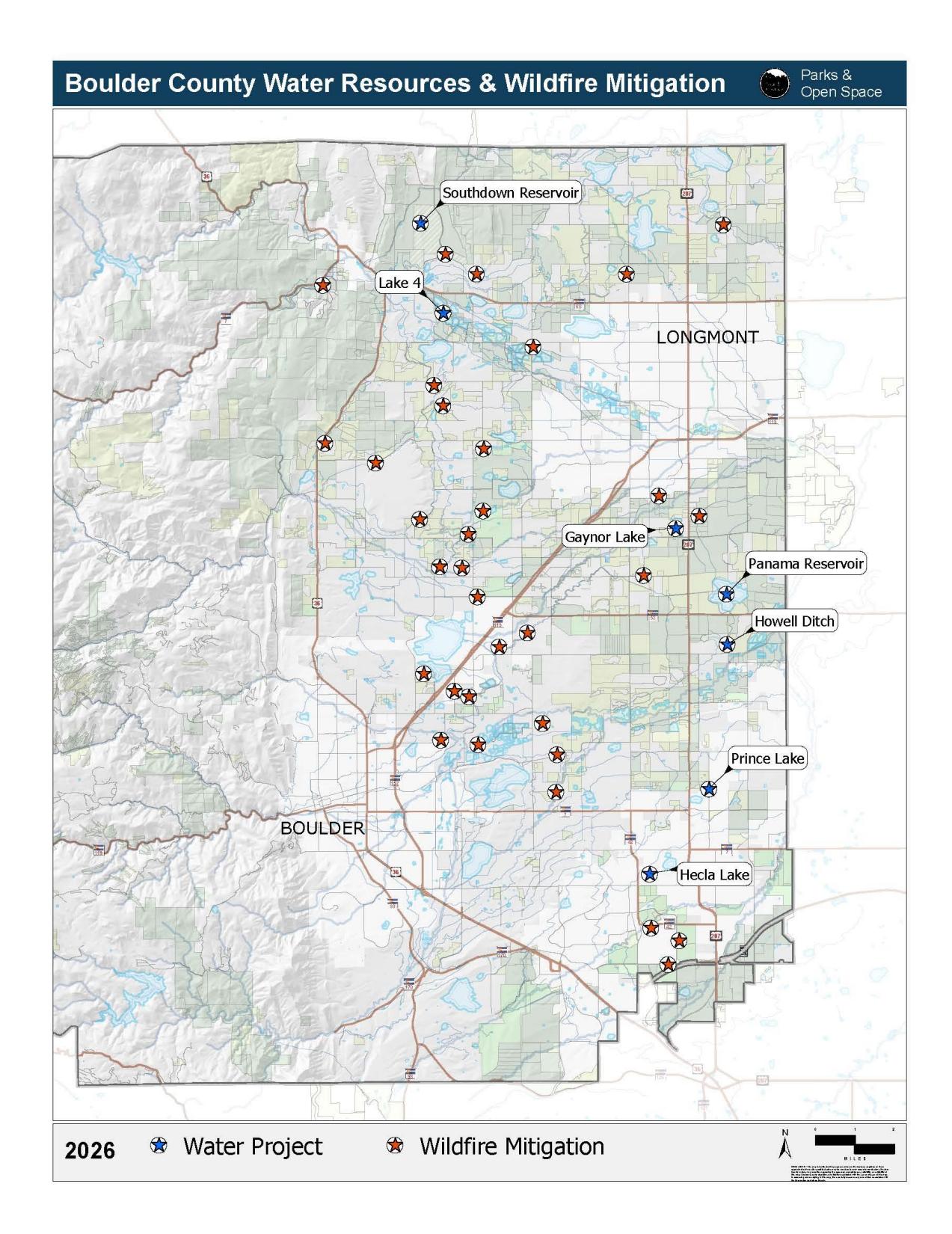
The projects are the Watershed Center’s 350-acre Conifer Hill Community Defense Project; the Boulder Valley Longmont Conservation District’s 54-acre Dry Gulch Forestry Project; the district’s 235-acre YMCA Camp Tumbleson Lake Forestry Project; and the Town of Superior’s three-year goat-grazing program covering 268.47 acres of open space.
The county recommendation and agreement packet recommended these awards:
- Conifer Hill: $990,262.88, with $1.1 million in matching funds.
- Dry Gulch: $207,000, with $364,000 in matching funds.
- YMCA Camp Tumbleson Lake: $417,000, with $856,000 in matching funds.
- Superior grazing: $191,350, matched dollar-for-dollar by the town.
Those figures are staff recommendations, not the final project-level awards. The projects generally involve forest thinning, slash management, improved tree spacing and other work intended to reduce wildfire fuel and improve forest resilience. The Conifer Hill project would treat about 350 operable acres on 22 private properties within a 768-acre high-risk project area and improve emergency access and evacuation routes, according to the packet.
Superior’s program would use about 300 goats in rotational grazing over three years to reduce grassland fuel loads in the wildland-urban interface. The planned treatment covers 77.92 acres in 2027, 65.05 acres in 2028 and 125.50 acres in 2029. The project also includes monitoring, invasive-weed and cheatgrass control, native-plant reseeding and public education. The record does not quantify the expected reduction in wildfire risk.
The grants are reimbursement-based. Recipients cannot begin work or receive funds until their agreements are executed, and they must document invoices, matching funds, acres treated and treatment methods. Final reimbursement requires a county-approved report with project costs, photographs and spatial data.
Superior’s agreement term runs through July 20, 2029. The available records do not show the other executed agreement dates, the final award for each project or the commissioners’ vote tally.