
Longmont’s proposed capital plan leaves millions in projects unfunded as utility gaps widen
Longmont’s proposed $316.6 million, five-year capital plan delays a water-treatment expansion and leaves portions of major utility, road and sewer projects unfunded while several funds draw on reserves.
Longmont’s proposed $316.6 million, five-year capital improvement program includes an explicitly delayed water-treatment expansion and leaves portions of major water, electric, transportation and sewer projects unfunded, according to the city’s 2027-2031 proposed capital improvement program.
The plan covers 2027 through 2031 and includes $95 million in proposed 2027 capital spending. It identifies projects as funded, partially funded or unfunded but does not compare them with the previous capital plan. The proposal therefore shows funding gaps and one stated delay, but not which projects are newly funded, reduced or canceled.
The city must hold a public hearing before Oct. 1. The detailed CIP was posted Sept. 3; the full line-item operating budget was expected in mid-September.
Water-treatment expansion delayed
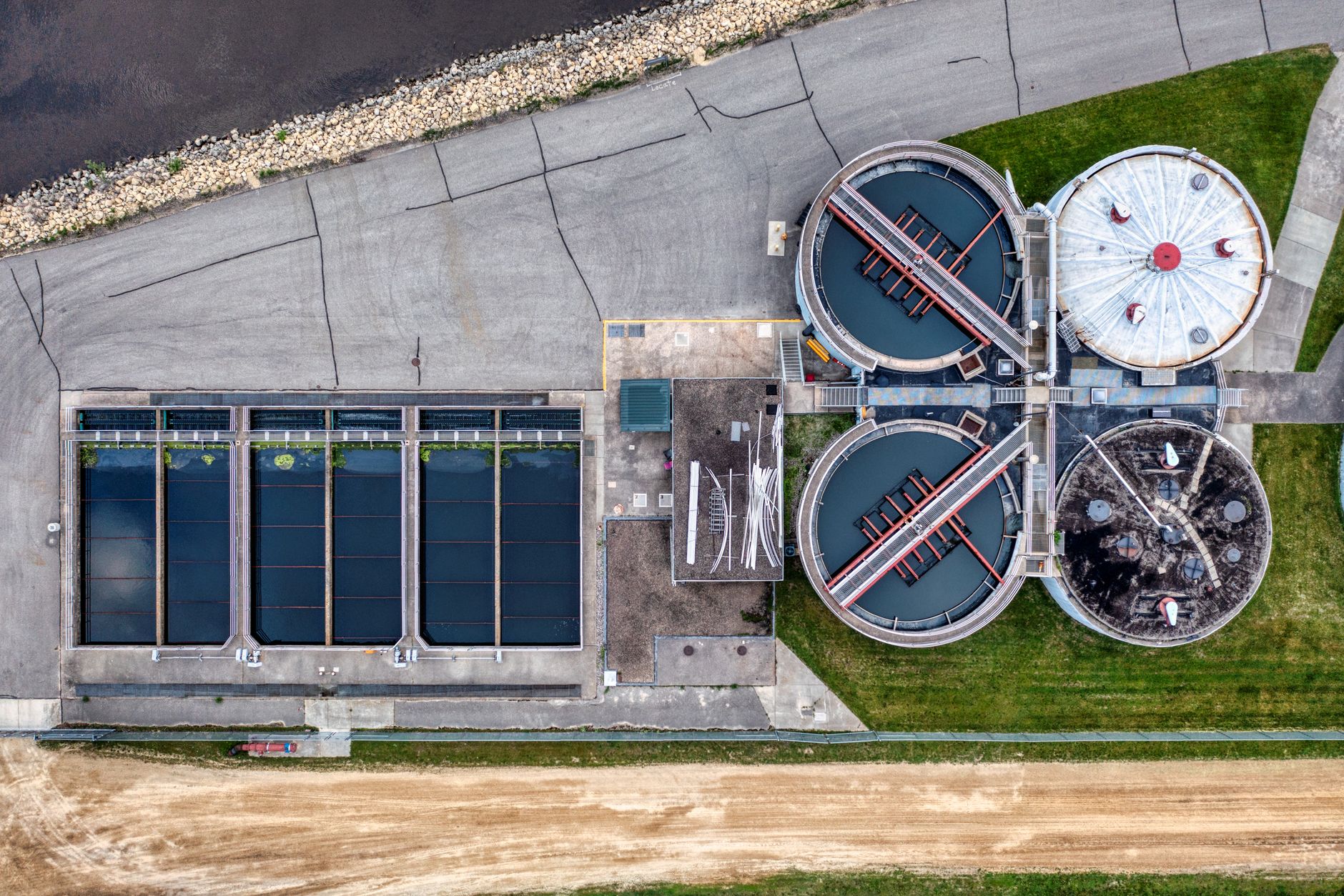
The Nelson-Flanders Water Treatment Plant expansion is listed as unfunded, with $30 million proposed for 2027 and $65 million in 2029. The CIP says construction was delayed after market-cost increases since 2019 left appropriated funding insufficient.
The expansion would eventually allow the Wade Gaddis plant to be demolished, though that work is outside the current five-year plan.
The Water Distribution Rehabilitation and Improvements program is partially funded. Its 2027, 2028 and 2029 allocations — $8.3 million, $7.6 million and $8.4 million — are shown as funded. The 2030 and 2031 amounts, $8.6 million and $8.9 million, are listed as unfunded. The city says the work would replace deteriorating lines, improve fire flows and water quality, reduce maintenance and improve treated-water delivery.
Longmont has about 360 miles of water mains, including 60 miles of cast-iron pipe, some more than a century old, the CIP says. The city expects to replace about two to three miles of water main annually.
Electric projects only partly covered
Electric feeder underground conversion is the largest 2027 electric project with an unfunded portion. Of its $13.25 million allocation, $250,000 is shown as funded and $13 million as unfunded. The CIP says converting the remaining overhead infrastructure is expected to take about 10 years.
The electric grid-modernization project has $2.25 million scheduled for 2027, including about $1.7 million funded and $550,000 unfunded. The work includes wildfire-mitigation technology and an outage-management upgrade.
The proposal also lists unfunded portions of substation expansion, street lighting, system reliability and rehabilitation, and system-capacity redundancy projects.
Pavement work below estimated need
Longmont’s Asphalt Pavement Management Program is partially funded at $12.5 million in 2027, with $7.95 million funded and $4.53 million unfunded. Over five years, it lists $69 million in work, of which $44.4 million is funded and $23.5 million unfunded.
The city maintains about 350 centerline miles of asphalt roadway but has enough funding to renew roughly five miles annually, compared with an estimated sustainable need of about 10 miles, the CIP says. It warns that lower funding would defer maintenance and lead to noticeable pavement deterioration.
Other transportation projects listed as funded include $4 million for South Pratt Parkway Bridge rehabilitation in 2027 and $1.3 million for railroad quiet zones. The Missing Sidewalks program is partially funded, with $175,000 in 2031 listed as unfunded. The city says the program would address Americans with Disabilities Act barriers and improve pedestrian connectivity.
Sewer and regulatory projects remain uncertain
The Sanitary Sewer Rehabilitation and Improvements program is fully funded at $8.2 million over five years, including $1.4 million in 2027. The city says the work is needed because the system includes more than 360 miles of pipelines and manholes, about 96 miles of which are more than 50 years old.
Other sewer projects are only partly funded. The fourth-digester project has $3 million funded for design in 2027, but its proposed $27 million construction phase in 2029 is unfunded. The city says the project would add treatment capacity and redundancy and allow another digester to be serviced.
The Water Quality Lab Expansion and Renewal project includes $1.2 million funded for 2027 HVAC work, while $8.8 million in later expansion and construction is unfunded. The city says the lab reduces the cost and regulatory risk of sending testing to outside laboratories.
A proposed wastewater-permit regulatory improvements project is entirely unfunded. It lists $3.5 million in 2027, $2 million in 2028 and $20 million in 2030. The project is contingent on anticipated permit requirements for temperature and total nitrogen, which the city says could require new or modified treatment processes.
Funds draw on balances
The 2027 Summary Budget Message projects revenues below expenditures in several major utility and infrastructure funds: $8.4 million in the Electric and Broadband Fund, $9.1 million in the Water Fund, $691,802 in the Street Fund, $4 million in the Sewer Fund and $4.8 million in the Water Construction Fund. Across 15 funds, the proposed budget shows a combined $40.2 million contribution from fund balances.
The CIP projects the Electric and Broadband Fund’s working capital will fall from $19.2 million in 2027 to negative $19.8 million in 2029 and negative $71.9 million in 2031. The document says the fund would fall below its minimum-reserve policy beginning in 2028. It cites a 2027 cost-of-service study and possible future rate increases as potential responses.
The Water Construction Fund is projected to fall below its minimum-reserve policy beginning in 2029. The city also plans a 2027 cost-of-service study that could lead to future rate changes.
City staff told the council the broader 2027 budget was balanced after reductions and adjustments while maintaining current service levels. But the Sept. 1 council communication said the city initially faced gaps between projected revenues and expenditures and presented a budget message and consolidated fund statement instead of the customary full line-item budget.
The proposed CIP and budget remain subject to council review and adoption. The city has not published an official comparison identifying which projects changed from the previous five-year plan.