
Longmont council sends public-safety tax package to Nov. 3 ballot
The council-approved ordinance would raise the sales-and-use tax by 0.33 percentage points and levy up to 2.44 mills in property taxes, with projected revenue for public-safety services and 86 positions over 10 years.
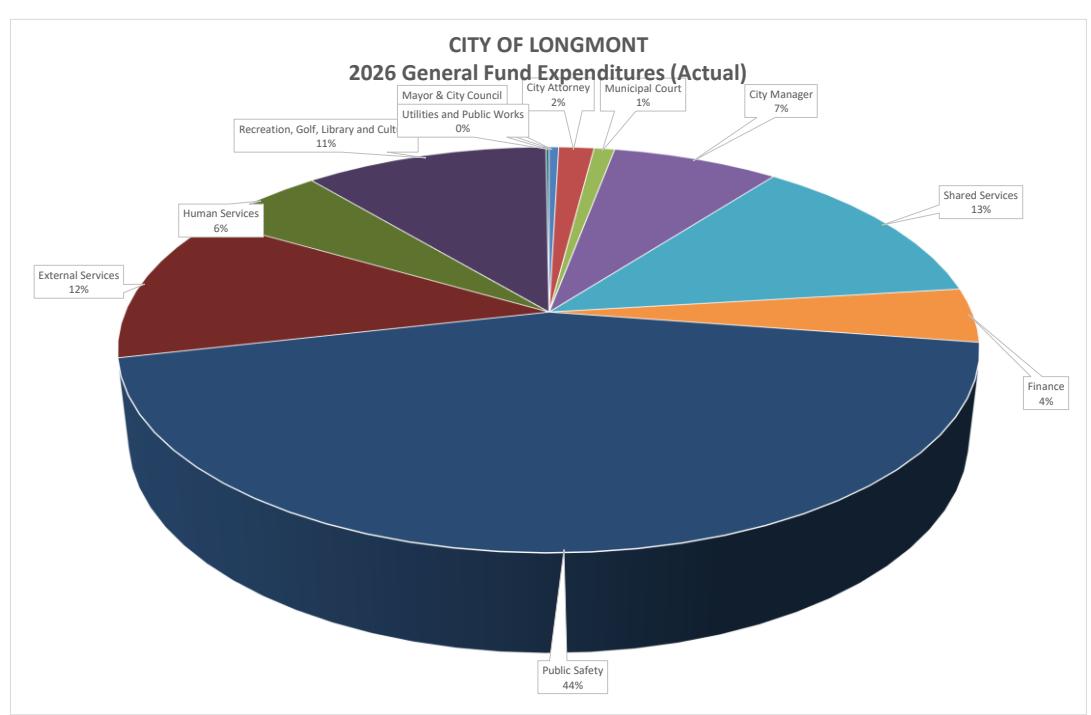
Longmont City Council voted 6-1 on Sept. 8 to ask voters to approve a public-safety tax package that would raise the city’s sales-and-use tax by 0.33 percentage points and authorize a property-tax increase of up to 2.44 mills.
The measure, approved as Ordinance 2026-53, will appear on the Nov. 3, 2026, special municipal election ballot. Its operative sales-and-use tax rate is 3.8653%, presented as 3.86% in the ordinance title and ballot language. The taxes would not take effect unless a majority of voters approves the measure and the required election certificate is filed, the council packet says.
The proposal would raise an estimated $19.5 million in its first full year. The additional sales-and-use tax would begin Jan. 1, 2027, if approved, while the property-tax levy would begin with the 2027 collection year.
The ordinance would dedicate the revenue to public-safety services, including police traffic enforcement and investigations, emergency dispatch, firefighting, emergency-responder support, equipment, vehicles and facilities.
Earlier city materials projected that the selected option could support 86 positions over 10 years: 43 police officers, 31 firefighters and 12 Collaborative Services employees. Those materials also identified behavioral-health response, crisis response, co-responder services and diversion programs as potential uses.
Staff projected annual revenue of about $20.86 million by 2036, including approximately $14.61 million from sales-and-use taxes and $6.27 million from property taxes. The estimates described the sales-and-use tax as an additional $3.30 per $1,000 in taxable purchases, or about $75 annually for a $500,000 home and $305 annually for a $500,000 commercial property. Actual property-tax bills would vary based on assessed value and other factors, the city’s Aug. 11 packet estimated.
The ballot language would allow annual mill-levy adjustments beginning in 2028 to offset specified changes in taxable value or reductions required by state law.
Longmont voters also are scheduled to consider three proposed Home Rule Charter changes: requiring voter approval before the city sells or conveys open-space land; using ranked-choice voting, where possible, for mayoral and council elections beginning in November 2029; and changing the timing of council elections for at-large and ward seats. The council-term question would depend on approval of the ranked-choice proposal.
A council discussion estimated the ranked-choice proposal could cost about $100,000 beginning in 2029.
Boulder County’s separate early-childhood ballot measure also is scheduled for the Nov. 3 election. It would propose a countywide property-tax levy of 2.579 mills, separate from Longmont’s municipal tax package.