
Longmont council to weigh Vance Brand Airport’s future as working capital projected to fall
Longmont’s Sept. 26 vision session will consider airport improvements, neighbor engagement and governance options as projected working capital drops to $350,753 by 2031.
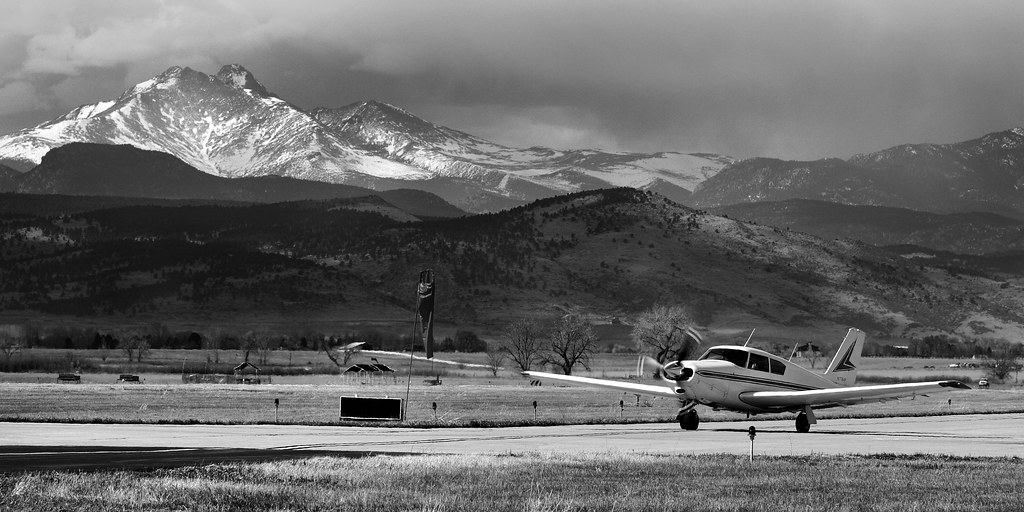
Longmont City Council will spend six hours Sept. 26 discussing the future of Vance Brand Municipal Airport, including possible improvements, community engagement and governance changes, as projected working capital declines from $618,031 in 2027 to $350,753 in 2031.
The City Council agenda schedules the Airport Vision Session from 10 a.m. to 4 p.m. at Public Works Operations, 375 Airport Road. The planning discussion is intended to identify possible amenities, programs and facilities and evaluate their costs, implementation effort, effects on city finances, effect on trust with neighbors and sequencing.
The session is not an announced project approval or funding decision. The agenda does not identify a specific improvement, governance model or budget commitment for council to adopt.
Airport fund faces projected pressure
The airport’s proposed 2027 operating-fund statement projects $733,170 in revenue and $733,170 in expenses. Hangar leases are expected to generate $500,000, the fund’s largest operating revenue source.
The airport vision session packet projects revenue remaining roughly flat from $733,170 in 2027 to $731,770 in 2031 while expenses rise from $733,170 to $825,189. The projection assumes annual growth in hangar-lease and miscellaneous revenue and roughly 3% annual increases in personnel and operating costs. The packet projects ending working capital of $618,031 in 2027, $576,853 in 2028, $519,213 in 2029, $444,173 in 2030 and $350,753 in 2031.
The packet also lists $607,860 in unfunded Vance Brand Airport improvements in the first year of a capital-improvement projection and $633,333 in the second year. The table does not specify whether those amounts are annual costs, total project costs or funding gaps, or assign them to individual facilities.
Separate long-range scenarios identify possible Taxilane A and B work, pavement striping, connector-taxiway and drainage improvements, an unleaded-fuel-tank transition and a master plan. The packet presents those as planning scenarios, not approved, funded or completed projects.
Governance options are also on the agenda
Council is scheduled to discuss whether a different governance structure could support the airport’s future. Options described in the packet include expanding the existing advisory board, using citizen assemblies, creating a technical advisory group or forming an airport authority with greater autonomy.
The airport’s stated goals include financial sustainability, physical improvements, south-side development and a community hub for gathering, education, research and development. Council materials also identify rebuilding trust with airport neighbors as a priority and suggest community events or “fishbowl” conversations as possible engagement tools.
An airport authority could have more independence from the city and, depending on its structure, could lease airport space, collect fees, issue bonds and pursue airport development. The airport-authority overview cited in the city’s materials identifies potential tradeoffs, including less direct city control, a lengthy formation process and the loss of shared administrative services.
The packet says staff and city leadership are expected to return with governance options and a recommendation after the visioning work. No final model, neighbor-representation structure or project-specific development plan has been adopted.