
Longmont delays school-zone sign installations while seeking state guidance
Staff says its reading of a new law could extend signed zones onto roads beyond current school zones, with implementation costs far exceeding current operating budgets.
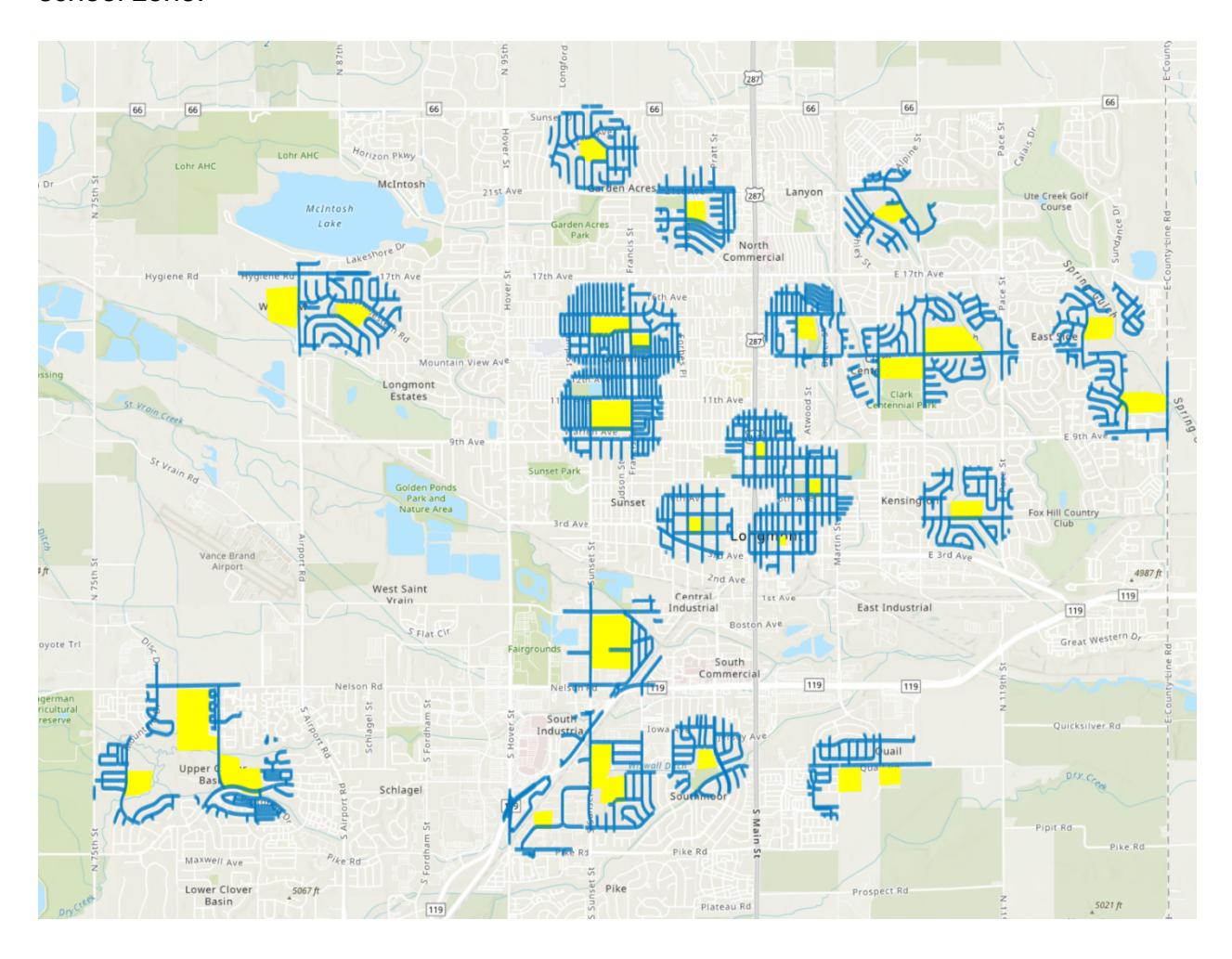
Longmont staff are holding off on installing school-zone signs at existing schools while seeking guidance on a new state law they say could require signs on roads beyond current school zones. Staff says carrying out the law as written would cost far more than current operating budgets allow, the city’s legislative-dinner packet says.
Under staff’s summary of House Bill 26-1318, new schools and schools without a defined zone as of Aug. 12, 2026, would need a signed zone extending at least 1,000 feet from the school property boundary. Existing zones shorter than 200 feet would need to be extended to at least 200 feet; zones already that long would require no change.
Longmont Traffic Engineering Administrator Kyle Haworth identified two unresolved questions: what the law means by “all roadways” and how to measure the required distances from school property. Staff says the law could require signs on local and residential roads that are not currently school zones, with signs marking entry to and exit from a zone on each side street. The city supports the law’s safety intent and is seeking clarification through the Denver Regional Council of Governments and discussions with legislators.
Staff says the work would include notifying nearby residents, identifying sign locations, checking for utilities and installing signs. The packet does not say whether other school-safety measures will change during the installation hold.
The issue is scheduled for discussion at Longmont’s Oct. 7 City Council Legislative Dinner, from 5 to 6:30 p.m. at the Longmont Museum. The agenda lists the bill as an example for a broader discussion of state mandates and municipal implementation costs, including possible partnering and cost sharing. The agenda calls for discussion, not a council vote or formal action, it says.