
Lafayette remains in Stage 1 drought response as reservoir storage sits at 73%
The city is seeking up to a 10% reduction in water demand; April-to-October use was 13% below a planning projection.
Published at
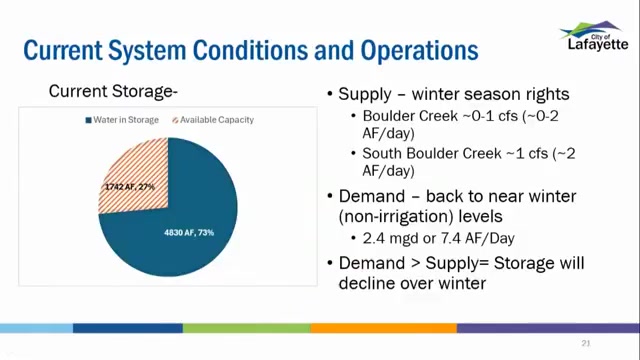
Lafayette remained in its Stage 1 drought response on Nov. 17, with reservoir storage at about 73% after a hot, dry year brought low stream flows and less refill than usual at Baseline Reservoir, Water Resources Manager Carrie Bishop told the City Council. The city has been in Stage 1 since April 10, and the response seeks up to a 10% reduction in total water demand, according to the city’s drought response page.
Residents are encouraged to limit outdoor watering to two days a week. Year-round city rules also prohibit watering from 10 a.m. to 6 p.m. and limit irrigation to no more than three days a week.
From April through October, water use was about 13% below the projection in the city’s Water Shortage Index, Bishop said. The index is a planning benchmark based on historical per-person use, so the comparison is to the model’s projection, not an average-use measure.
City staff reported sending more than 1,000 initial water-restriction notices, followed by 172 second notices, and referring about 30 cases for fines. They also sent roughly 478 notices about possible leaks. Under the city’s water-restriction enforcement rules, warnings are not fines, and the city may proceed to enforcement without first issuing a warning.
Bishop said the city added 760 acre-feet of capacity with a new cell at Goosehaven Reservoir, and nearly 1,500 acre-feet of capacity over the past year. That is additional room to store water, not water already in storage. Separately, staff reported that total stored water had declined from about 5,100 acre-feet a year earlier to about 4,700 acre-feet at the update.
The city considers storage, streamflow, snowpack, precipitation and customer demand when deciding whether to change restrictions. Additional restrictions may be imposed if supply worsens or Stage 1 does not produce needed demand reductions, the city’s water-restrictions FAQ says. Bishop said the city would remain in Stage 1 while staff monitored conditions.