
Boulder recommends $417 million operating budget with service cuts, utility rate increases
The recommended plan includes $6.3 million in reductions, $10.6 million for Alpine Balsam affordable housing and $14.4 million for shared infrastructure.
Published at
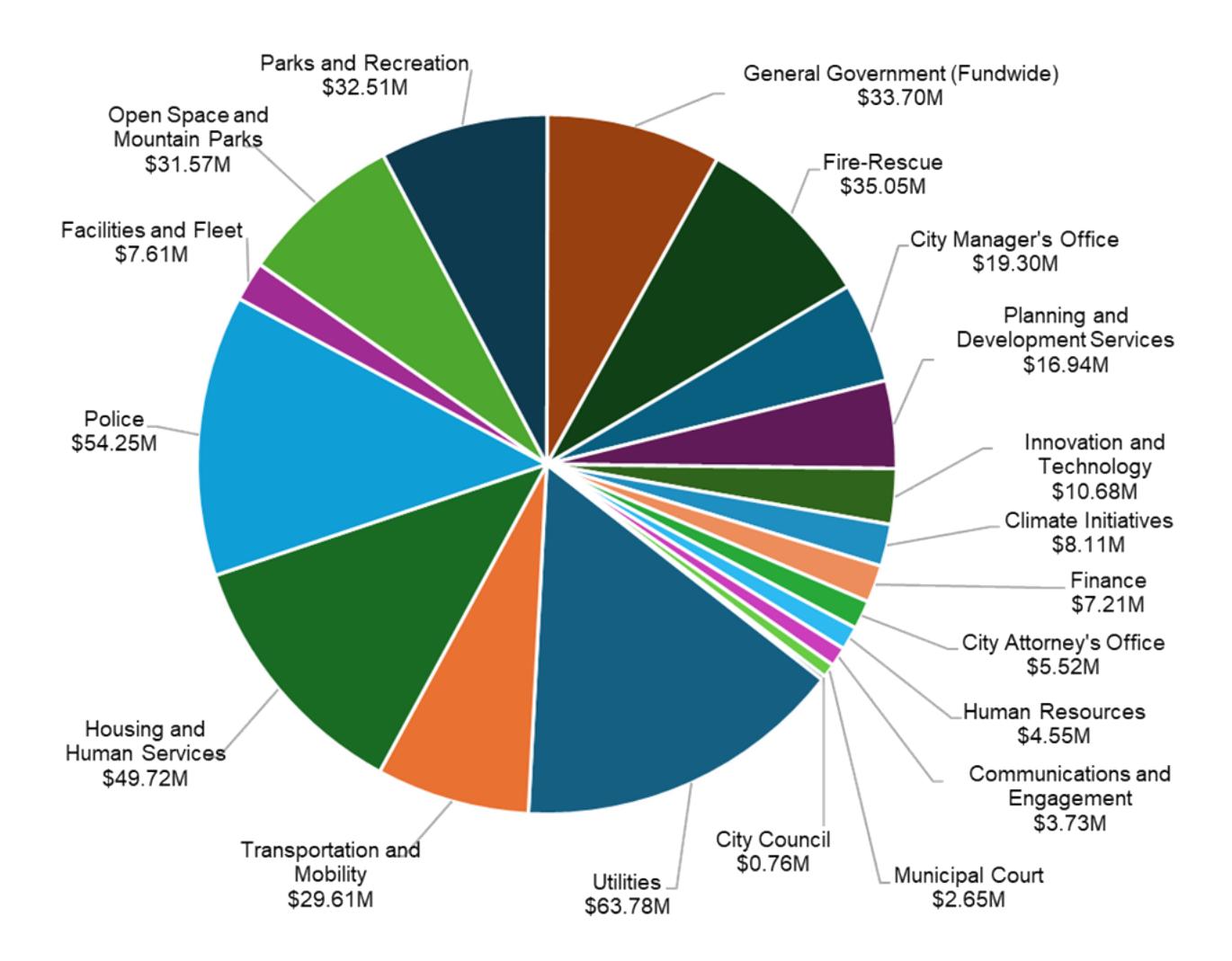
Boulder is proposing a $417.24 million 2027 operating budget, 2.35% above the approved 2026 operating budget, with $6.3 million in reductions. The citywide proposed budget totals $552.6 million, including $135.36 million for capital projects; the $417.24 million figure covers operating expenses, the city’s budget proposal shows.
Proposed reductions include shorter hours at Scott Carpenter Pool, ending child watch at East Boulder Community Center and reducing ongoing funding for Spruce Pool. One-time funding would keep Spruce Pool open through 2027. The budget memo says the operating plan was balanced after the reductions.
The proposed tax and fee package would increase water rates by 5% and wastewater, stormwater and flood-management rates by 7%. Customer bills would depend on use. It would also begin collecting a Transportation Maintenance Fee from property owners in 2027. The budget forecasts $3.03 million from the fee for transportation maintenance, including bridges, pavement, sidewalks and street markings; it does not specify a per-property charge.
A draft ordinance would set the city property-tax levy at 11.648 mills: 7.948 mills for general operations, 2 mills for public safety, 0.8 mill for the Community Housing Assistance Program and 0.9 mill for the Permanent Park and Recreation Fund.
At a Nov. 18 presentation to the Housing Advisory Board, city staff projected about $18.8 million in 2027 Affordable Housing Fund revenue and outlined plans for Ponderosa and an inclusionary-housing study. The projected revenue includes cash-in-lieu payments, commercial impact fees, short-term-rental revenue and about $3.2 million from the county’s attainable-housing tax. Staff estimated the city would deliver about 14 homes at Ponderosa in 2027. Staff also said the city plans to study its inclusionary-housing requirements in 2027 and bring the findings to the Planning Board.
The city’s proposed allocations include $10.6 million for affordable housing at Alpine Balsam and $14.4 million as the housing share of shared site infrastructure. The infrastructure funding covers shared costs across Alpine Balsam’s uses, not just housing construction. The city also plans to set aside $2 million in each of 2027 and 2028 to search for a site for another permanent supportive-housing project; the funding is for a search, and no site is identified in the presentation. Boulder Housing Partners secured competitive tax credits for the first phase of Alpine Balsam’s 55-and-older development.
Separately, City Council’s Nov. 12 agenda included a proposed emergency ordinance to raise Boulder’s additional recreational-marijuana sales and use tax from 3.5% to 5.5%, according to the agenda. Staff forecast the increase would generate $512,000 in annual revenue beginning in 2027 to help offset reductions in state-shared marijuana revenue. The draft ordinance proposed a Jan. 1, 2027, start date, the staff memo and proposed ordinance say.
The proposed fee schedule would raise some charges for specific users. The annual rental-license excise tax would rise from $80.71 to $82.57 per dwelling unit, and rental-license fees would increase from $190 to $220 per building or accessory dwelling unit. For new homes, transportation excise taxes would rise from $4,826.22 to $4,951.70 for detached homes and from $3,501.50 to $3,592.54 for attached homes and mobile homes. A $2.48-per-square-foot transportation charge would apply to new or additional nonresidential floor area. The charges apply when the relevant taxable activity or permit is involved.
Among the district proposals, Boulder Junction’s Parking district would cut its levy from 10 mills to 5 mills for 2027 through a temporary tax credit, then return to 10 mills in 2028. Its proposed budget is $357,149. Central Area and University Hill districts would also use temporary credits, resulting in proposed net levies of 4.238 mills and 1.400 mills, respectively. Forest Glen Transit Pass proposes a zero-mill levy for 2027, instead of its standard 2.310 mills.
The Downtown Boulder Business Improvement District’s proposed budget and operating plan estimate a 4.357-mill levy, which the plan says will be finalized in December. The district levy applies to taxable real and personal property that is not agricultural or residential, principally affecting covered downtown businesses and property owners. The Knollwood Metropolitan District proposes keeping its 20.570-mill levy unchanged.