
Longmont City Council finalizes citywide ban on hyperscale data centers
The ordinance, approved 6-1 on June 9, bars hyperscale data centers in all zoning districts and lets staff treat related facilities on adjacent parcels or shared power connections as one project.
Published at
Longmont City Council voted 6-1 on June 9 to approve Ordinance 2026-34, finalizing a citywide ban on hyperscale data centers.
The ordinance prohibits hyperscale data centers in all zoning districts. On second reading, council also approved amendments to define a hyperscale facility as one with projected peak electrical demand "equal to or greater than" 5% of Platte River Power Authority's nameplate capacity or 100 megawatts, whichever is lower.
Council also amended the ordinance to address projects that might try to stay below the threshold by dividing into multiple buildings or phases. Under the June 9 amendments, staff may consider shared ownership or end users, connected or adjacent parcels, and the same point of interconnection when deciding whether facilities operate as one hyperscale project.
Councilmember Shiquita Yarbrough Popkin said during the meeting that the revisions were meant to fix drafting problems from the earlier version and give staff flexibility to evaluate projects based on their actual utility and land-use impacts. The council record also shows one amendment corrected threshold language that had said "no greater than" before it was changed to "equal to or greater than".
The June 9 debate centered partly on whether the city had moved too quickly. Popkin argued Longmont needed to act before a hyperscale proposal arrived because such projects can move quickly and could place heavy demands on power and water systems.
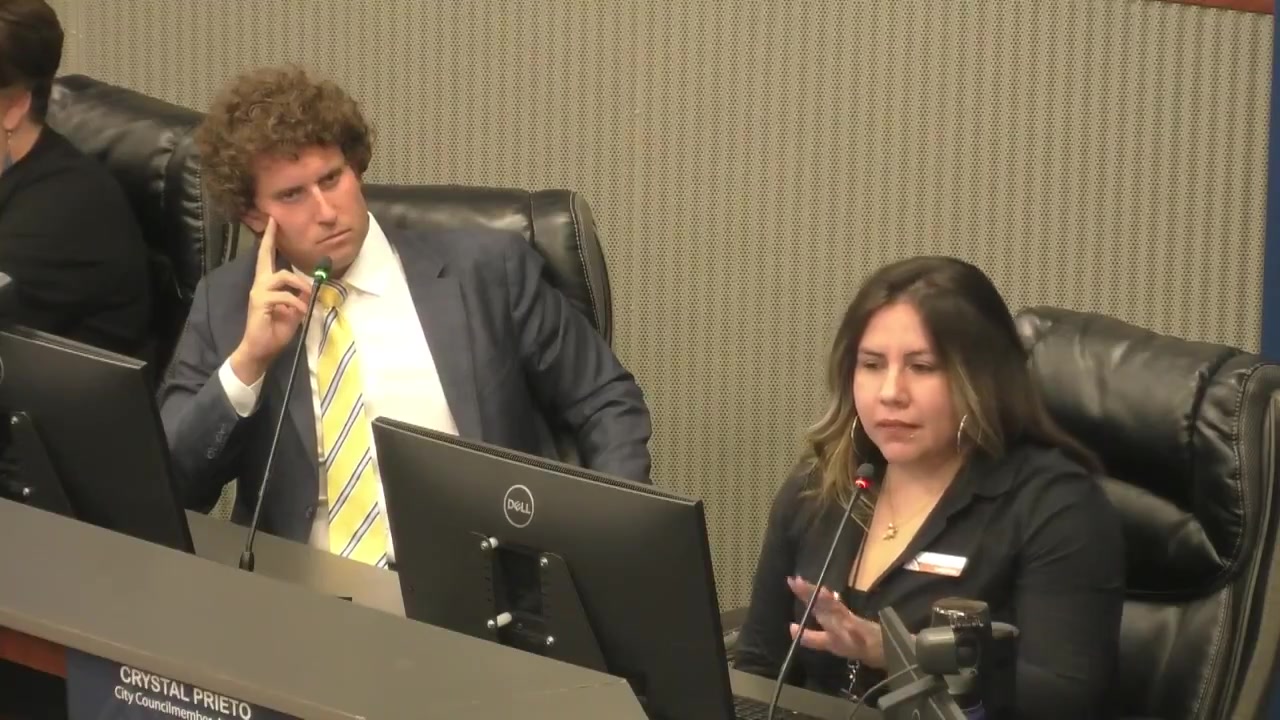
Not all council members agreed. Councilmember Matthew Popkin Christ called the ordinance "half baked" and argued for more time, while Councilmember Aren Rodriguez Prieto said late amendments made the final language harder to assess and said she would have preferred a study session or tabling the item.
The public record reviewed for this story does not identify a named pending hyperscale application in Longmont.
Several arguments raised during the meeting were prospective rather than tied to a filed project. During public comment, one resident warned a large data center could use 3 million gallons of water a day. Christ said Longmont already has water-use rules for large business users, including a requirement that users above 3 million gallons per acre provide their own water resources for the deficit.
Privacy and surveillance concerns in the record came mainly from public comment, not from a separate staff analysis. Residents argued that data centers can concentrate information in ways that raise fears about misuse and privacy violations.
Planning staff said any proposal that conflicts with the ordinance would be screened through Longmont's development review process and would not receive approval to build. Assistant City Attorney Tim Holes said the city's existing Title 15 enforcement provisions would apply.
The ordinance leaves some implementation questions for a future application. The June 9 discussion distinguished hyperscale facilities from smaller data centers and other energy-intensive critical infrastructure already in Longmont, but the first practical test may come only if a developer proposes a project large enough — or fragmented enough — to force staff to decide where ordinary data infrastructure ends and a hyperscale operation begins.