
Colorado regulators give RTD 30 days to explain rail-safety staffing changes
The Public Utilities Commission reopened a corrective action plan tied to RTD’s 2022 Aurora derailment after staff said the agency was no longer meeting supervisor-staffing commitments it had previously agreed to.
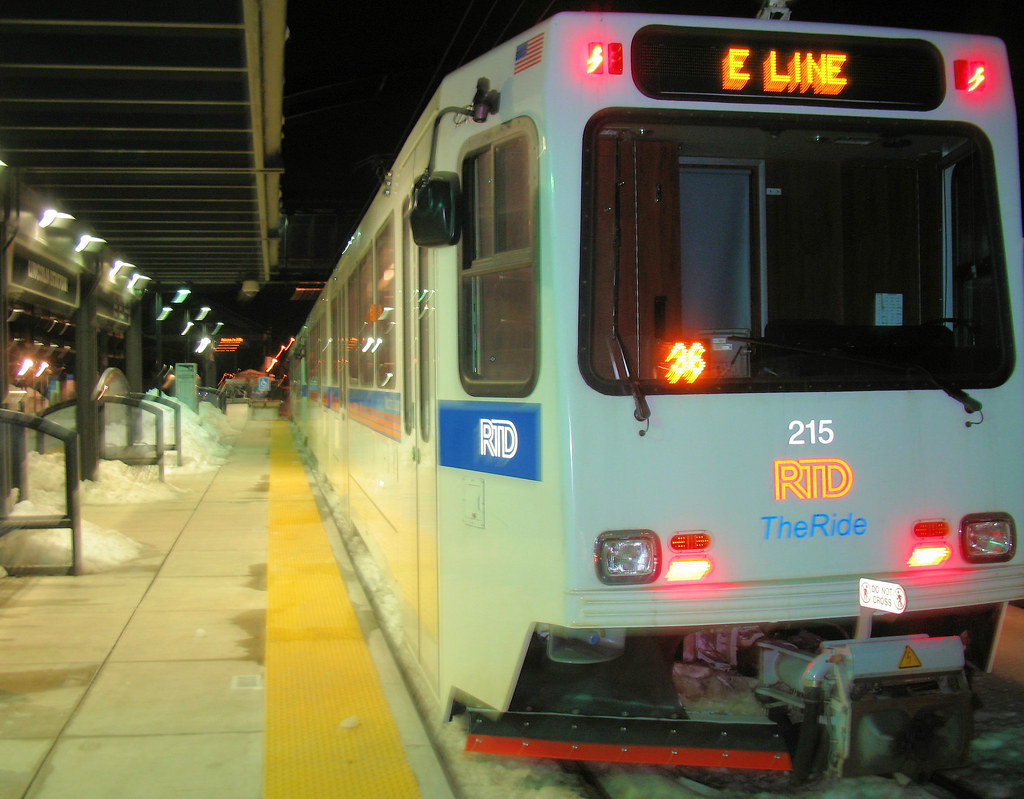
Colorado regulators on June 10 ordered RTD to explain rail-safety staffing changes and submit organizational and risk documents within 30 days of the order’s effective date after reopening a corrective action plan tied to the 2022 Aurora light-rail derailment at Sable Boulevard and Exposition Avenue.
The action adds a formal deadline to a safety case the commission had already reopened over concerns that RTD was no longer following staffing commitments made after the derailment. The case began after the Colorado Public Utilities Commission in 2022 ordered RTD to file a corrective action plan following the Sept. 21, 2022 derailment in Aurora.
At the June 10 meeting, commission staff told commissioners that RTD reported on March 31, 2023 that it had completed an evaluation recommending 17 additional field and lead supervisors to provide supervision, conduct accident investigations, perform rights checks and coach operators. Staff also said RTD later responded on Feb. 6, 2024 that it agreed to hire 14 additional field supervisors and three lead supervisors and had budgeted those positions in 2024.
But staff said at the same meeting that RTD later provided staffing numbers in March 2026 that did not match those agreed levels. According to staff’s presentation, RTD first gave incorrect numbers on March 10, then updated them March 26, and the revised figures still did not align with the staffing levels previously discussed in the corrective action plan. Staff also said RTD appeared to be considering reducing field-supervisor positions and eliminating the lead-supervisor role in favor of a management position.
The commission’s oral order on June 10 requires RTD to file:
- an explanation of why staffing levels were never increased as approved in the corrective action plan and reflected in RTD’s budget;
- an explanation of how RTD would remain compliant with other corrective-action items while reducing staffing levels;
- documentation showing those corrective-action duties are still being performed;
- a current organizational chart;
- the management-of-change risk assessment connected to the staffing reorganization;
- job descriptions for field and lead supervisors;
- information showing that all lead-supervisor duties would be retained in any replacement position;
- an explanation of whether revised responsibilities would impair supervisors’ ability to perform adequate investigations while ensuring public safety; and
- a workload analysis showing current and expected supervisory workloads after the staffing or position changes, according to the commission meeting record.
The dispute matters because those supervisor positions were part of the safety response to a derailment case regulators had previously treated as resolved. Reopening the plan means commissioners are now treating RTD’s staffing choices as an active compliance issue, with possible implications for operator coaching, accident investigation and other rail-safety functions.
What remains unresolved is the exact calendar deadline. Staff said on the record that RTD must respond within 30 days of the order’s effective date, but the written order number and effective date were not available in the records reviewed for this story. Until that written decision is posted, the precise due date cannot be independently calculated from the public record reviewed here.
A written decision reviewed for this story also does not yet spell out any specific penalty. But the reopened corrective action plan itself keeps the derailment case under active commission oversight and requires RTD to defend whether the staffing changes would undermine required safety work. If the forthcoming filings show unresolved risk or noncompliance, commissioners could take further action in the reopened proceeding.
This story updates earlier reporting by adding the commission’s formal order, the specific documents demanded from RTD and the 30-day filing requirement.