
CSU study warns Republican River curtailment could cost region up to $1.53 billion a year
A Colorado State University-backed analysis says a basin-wide halt to groundwater pumping in Colorado’s Republican River basin would carry steep economic costs. Officials told lawmakers the South Fork Focus Zone has retired about 19,000 acres, with roughly 21,000 to 22,000 acres retired or queued toward a 25,000-acre 2029 target.
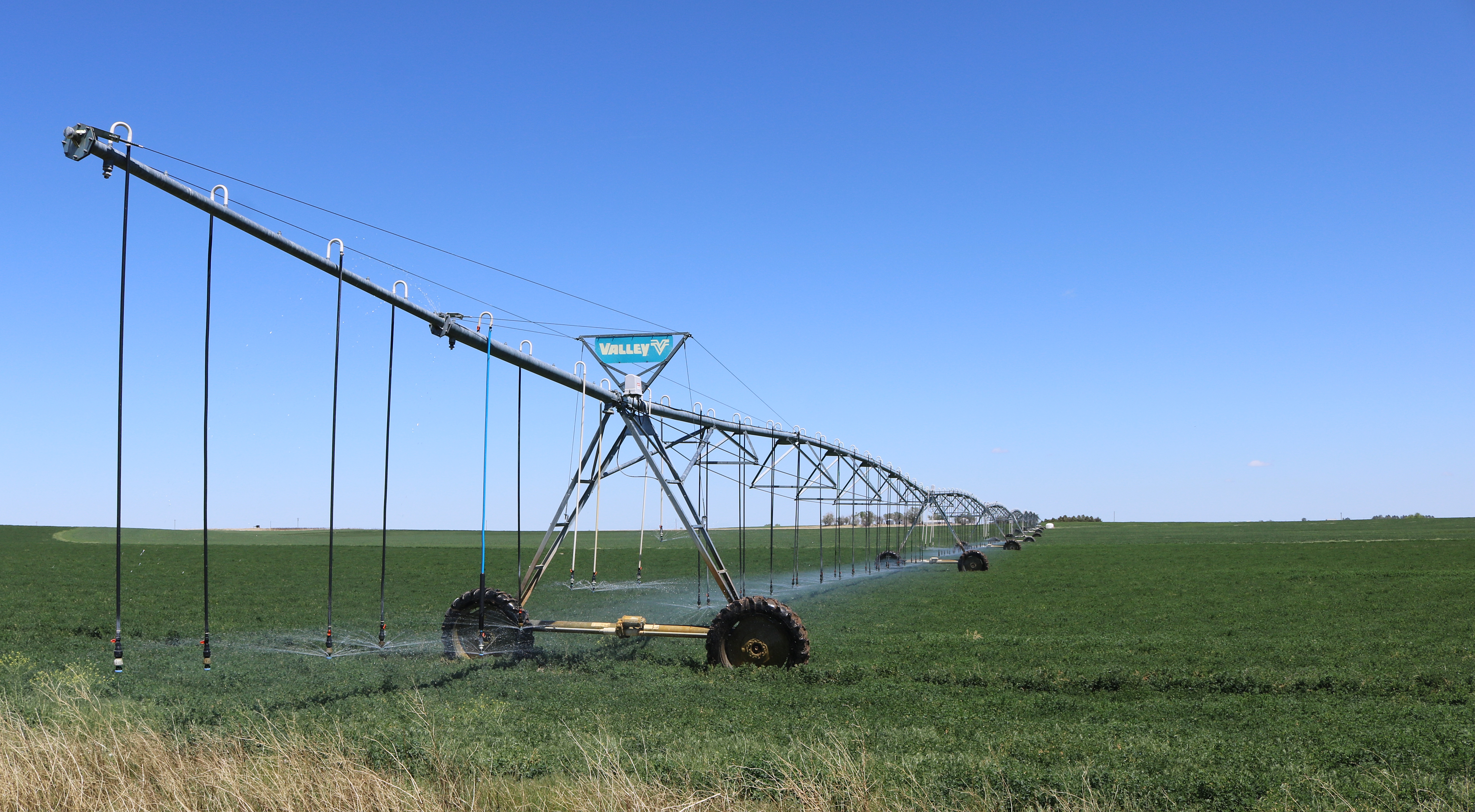
A Colorado State University-backed report released through the Colorado Water Center warns that a basin-wide halt to groundwater pumping in Colorado’s Republican River basin could cut annual regional revenue by about $656 million to $1.53 billion, depending on how land use changes after irrigation stops.
The timing matters because Colorado must retire 25,000 irrigated acres in the basin’s South Fork Focus Zone by Dec. 31, 2029, or risk broader pumping curtailment under the state’s Republican River Compact compliance framework. During a legislative hearing June 25, basin general manager Don Brown said the region has retired about 19,000 acres and has another couple thousand acres “in the queue,” putting it around 21,000 to 22,000 acres.
The December 2025 report, funded under House Bill 23-1220, was prepared by Colorado State University researchers Rebecca Hill, Dale Manning, Jordan Suter and Innocent Vomitadyo. It modeled what would happen if groundwater irrigation ended across 526,431 irrigated acres in the basin’s eight-county study area.
The report lays out four scenarios rather than a single forecast. In the least severe scenario, it estimated annual revenue losses of about $656.2 million and roughly 2,591 jobs. In the most severe scenario — which adds a 50% drop in demand for non-grazing livestock sectors on top of land-use changes — it estimated annual revenue losses of about $1.533 billion and 5,263 jobs.
The study also estimated combined state and local government revenue losses of about $48.7 million to $97.3 million annually. At the June 25 hearing, researchers said the range for Colorado state tax receipts alone was roughly $11 million to $28 million.
The authors also noted limits to the analysis. They wrote that the input-output model does not capture every possible downstream effect, including some price changes, supply-chain shifts and the possibility that some economic activity would move elsewhere rather than disappear entirely. They described the livestock-demand shock in the worst-case scenario as an illustration of possible downstream effects, not a precise prediction.
On the retirement effort, the Republican River Water Conservation District says 19,188.88 of the required 25,000 acres have been retired through conservation programs. The Colorado Water Conservation Board says that more than 17,000 acres had been retired as of spring 2025 and that Senate Bill 25-283 added $6 million to help retire the remaining nearly 8,000 acres.
Brown told lawmakers the district has assembled substantial funding, citing roughly $155 million in local money, $30 million in federal ARPA support and $10 million from the Colorado Water Conservation Board. But the public record reviewed for this story does not fully itemize the local total or show how much of that money is already spent, committed or still available for additional retirements.
The basin’s immediate question is whether the current pace and funding will be enough to close the remaining acreage gap before 2029 and avoid the far costlier alternative outlined in the CSU study.