
Longmont survey respondents rate quality of life highly, raise concerns about night safety and growth
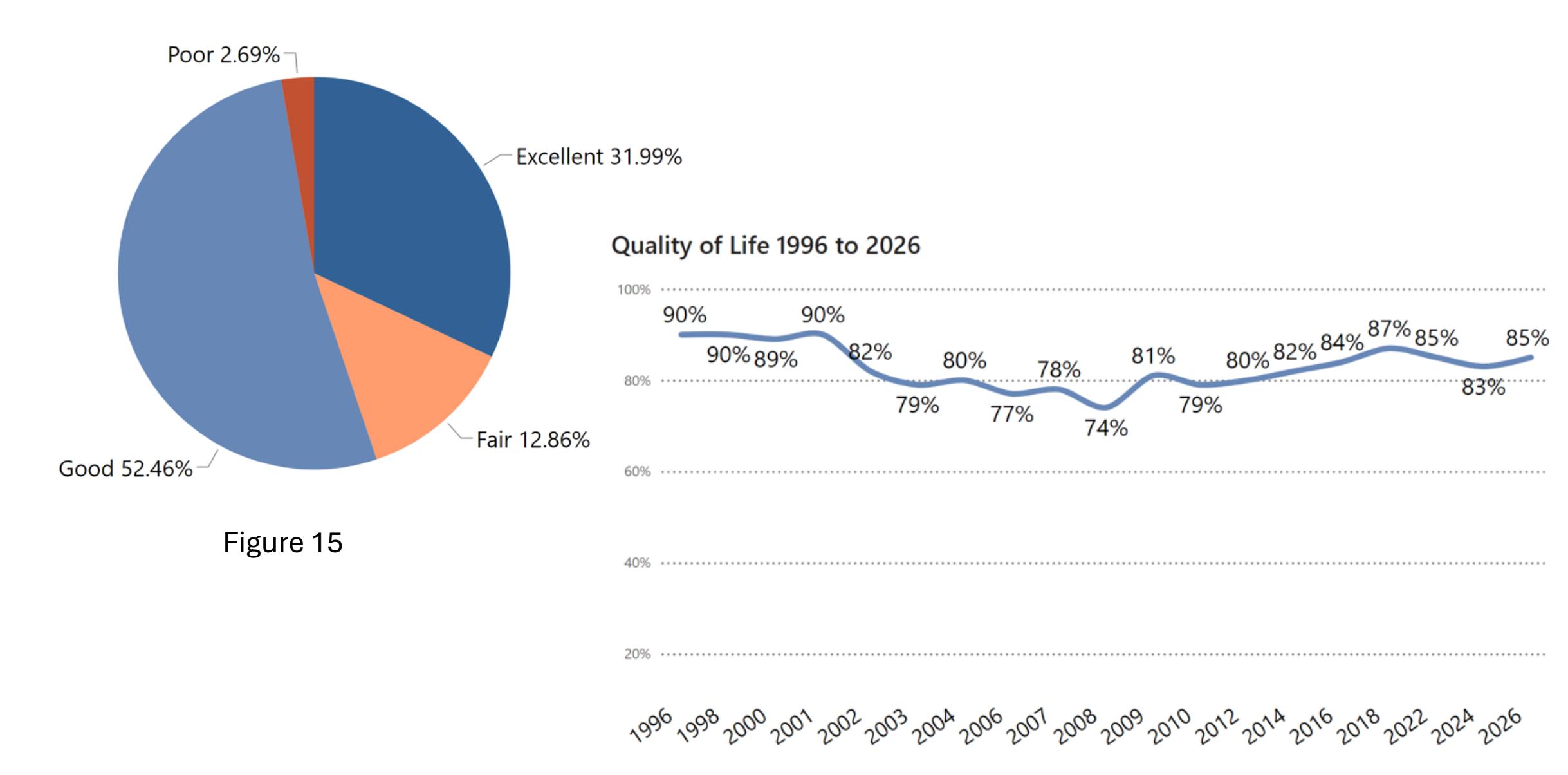
In the open survey, 84% rated Longmont’s quality of life good or excellent; 59% said they felt safe across the city at night.
Published at
Longmont’s 2026 Community Satisfaction Survey found that 84% of respondents rated the city’s quality of life good or excellent, while 70% said population growth was happening too fast and 59% felt safe across Longmont at night.
The survey report in the City Council packet says 3,944 people responded digitally, with about 60 paper surveys still being processed when the report was prepared. The 2026 survey drew more responses than the 606 recorded in 2024.
The survey was open to people who live, work or study in Longmont. The city used digital and in-person outreach, including targeted efforts to reach groups underrepresented in earlier surveys, and shortened the questionnaire. The report says weighted and unweighted results were closely aligned, so it reported unweighted results. Because participation was self-selected, the findings describe respondents’ views and should not be read as representative of all Longmont residents.
Among respondents, 59% said they felt safe across Longmont at night, compared with 90% during the day. For downtown, 60% felt safe at night and 92% during the day; in their neighborhoods, the figures were 83% at night and 96% during the day.
Views on growth varied by type. While 70% said population growth was happening “much” or “somewhat” too fast, 54% said housing growth was too fast and 22% said it was too slow.
Health, dental or insurance costs and groceries were the top household-cost concerns identified in the report. Thirty-seven percent said they worried “a lot” about health, dental or insurance costs, up from about 20% in 2024.
The respondent pool differed from Longmont’s demographics: 77% identified as White, compared with a Census estimate of 72% of residents, while 7.3% identified as Hispanic or Latino, compared with about 24% of residents. The report also says respondents skewed toward higher incomes and more education.
The City Council is scheduled to hear a presentation on the survey Nov. 3.