
Boulder staff outline up to $1.85 million in 2027 wildfire enhancements
The framework identifies grants, Open Space Fund money and a possible shift of existing Climate Tax Fund spending as potential support; staff described 14 progress measures, with annual updates likely starting in 2028.
Published at
Boulder staff have outlined up to $1.85 million in possible 2027 wildfire-program enhancements, alongside an estimated $10.25 million in current annual spending across 10 priority programs.
The framework in the packet for City Council’s Oct. 22 study session lists up to $500,000 for home and property risk reduction, $100,000 for community emergency preparedness, $600,000 for wildfire fuels management and $650,000 for evacuation planning.
The packet identifies up to $1.25 million in county, state and federal grants the city is pursuing or plans to pursue, and up to $600,000 from the Open Space Fund, as potential sources for the enhancements. It does not assign final funding sources to each item. Separately, it lists a possible realignment of $1.8 million in existing 2027 Climate Tax Fund expenditures for home-risk reduction and community-preparedness work. That would redirect existing spending, not provide new revenue.
The $10.25 million estimate is an order-of-magnitude figure for the 10 priority programs, not all 25 programs or 137 projects in the framework. It includes costs such as staff time, equipment, materials, contractors and administration.
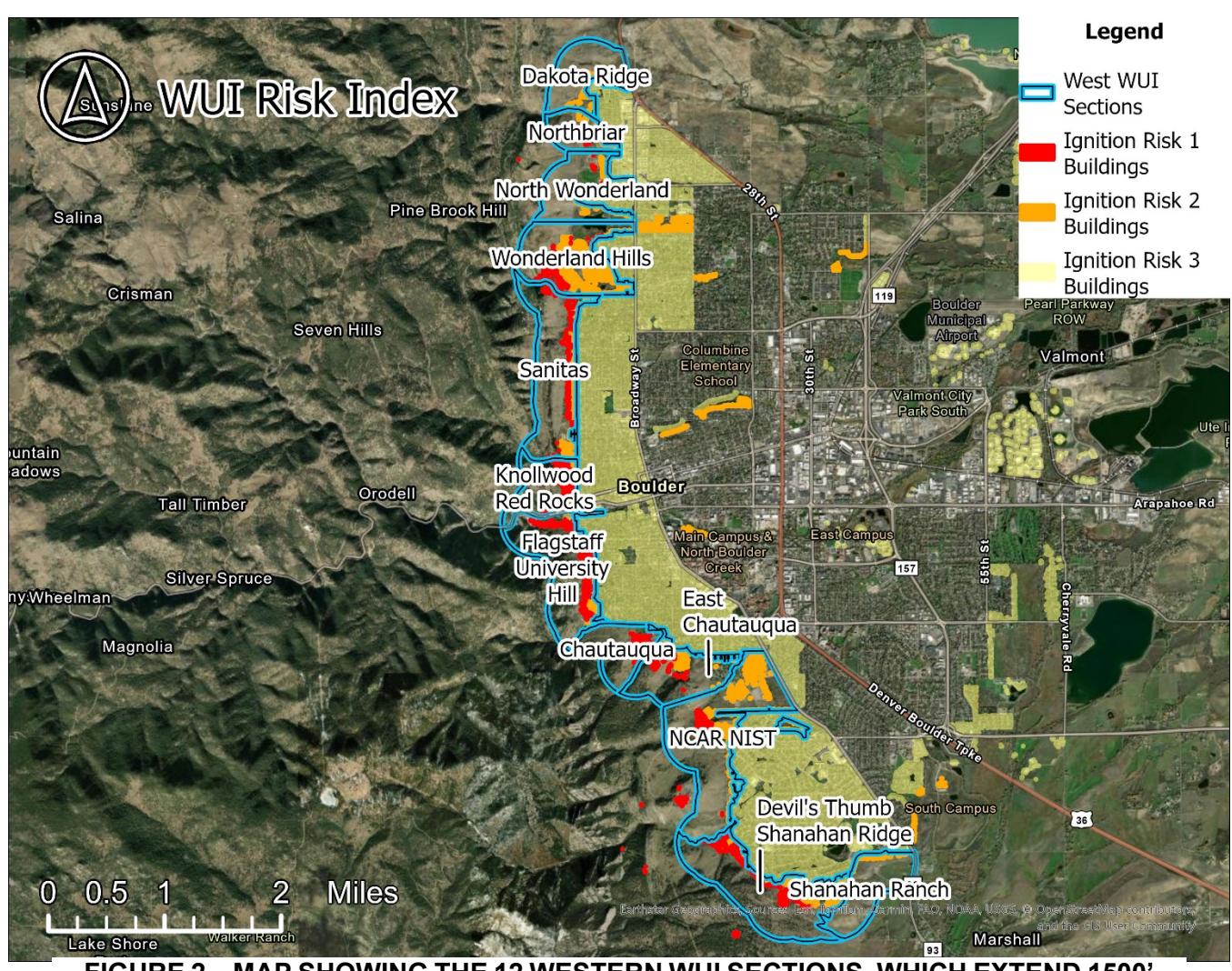
The framework organizes 137 projects into 25 programs and sets proposed 2030 goals for 12 western wildland-urban-interface areas. Those goals include detailed assessments for 55% of homes, qualifying home hardening for 20% and evacuation-preparedness programming for 75%.
At the Open Space Board of Trustees’ Oct. 30 retreat, city staff presented the framework and described 14 measures to track progress and risk reduction over four years. Staff said 2027 would be the first year for evaluating priority work, which was already underway, and that annual progress updates to the board and City Council would likely begin in 2028.
Trustees urged the city to make information about wildfire risk, completed treatments, household preparedness and residents’ actions easier for the public to access and understand. Their suggestions included simpler progress indicators, more frequent updates and an interactive map showing treatments over time. Staff said a wildfire-ready homeowner resource had recently gone live.
At the retreat, staff also discussed a possible adjustment of up to about $600,000 in Open Space funds. The amount and mechanism remained unsettled, and trustees did not formally vote on the framework or a funding shift. The retreat discussion did not establish whether this possible adjustment was the same Open Space funding identified as a potential source in the packet.
Staff expected to return around April 2027 with updates on grant applications, reporting plans and possible budget realignments. The Oct. 22 packet said staff planned to seek City Council feedback and bring any final work plan and funding shifts back for council consideration in spring 2027; it described the study session as discussion, not a vote on a spending package.